Showing posts with label Fool's Views. Show all posts

Friday, February 18, 2011

Fool's Views: The Changeling/Legend of Hell House


Hey troops,

The Doc and Jon Kitley (of Kitley's Krypt) will be roadtripping this weekend to the wilds of Oshkosh, WI, to take in the spine-tingling pleasures of John Pata and the Oshkosh Horror gang's monthly HOUSE OF HORRORS double feature. February's outing is one of a ghostly variety, featuring two of the best creepers out there. If you're near the Fox Valley, or up for a bit of driving, join us Saturday night!

From the Oshkosh Horror website:

"House of Horrors is all about getting people together to celebrate our love for the horror genre. Over the past three and a half years, we’ve seen much of what the horror genre has to offer....together...in the dark. Part of the fun at House of Horrors is not only viewing the movies we all love, but showing a title or two that perhaps you haven’t seen. This month we are focusing on two titles, we feel, might be under the radar and/or overlooked. Plus… this is our first haunted house double feature!

On top of the movies, we will be hosting another round of horror movie trivia, so start studying for your chance to win all sorts of goodies! As always, House of Horrors is free and open to the public, so bring your friends!"


Dr. AC weighs in on this most awesome of double features:

Changeling, The (1980)
This stellar haunted house tale usually takes a back seat to the big budget envisioning of Stephen King’s The Shining, released the same year. But in many ways, Peter Medak’s smaller film, loaded with creepy atmosphere and tightly fashioned suspense sequences, surpasses any axe-swinging histrionics that Kubrick dishes out. As a grieving composer recovering from the deaths of his wife and daughter (a harrowing pre-credits sequence), George C. Scott anchors the picture with a compelling strength and vulnerability. Roused by a murdered child’s spirit in the mansion where he has retreated, Scott’s utter conviction with which he seeks to uncover the mystery is riveting. There’s also the neat subplot of Melyvn Douglas’ duplicitous politician, whose backstory proves more and more integral to the house’s healing. William Gray and Diana Maddox have crafted a marvelous script, one that functions not only as a pure ghost story but equally well as a character study charting Scott’s journey back from the abyss of tragedy and loss. Well worth seeking out.


Legend of Hell House, The (1973)

In the pantheon of top-notch haunted house movies, this fine, moody offering ranks just below Robert Wise’s outstanding The Haunting, to which it owes a great debt. The familiar premise concerns a team of spiritual sleuths assigned to investigate Belasco House (aka “Hell House”) to provide evidence of life after death. However, unlike the ambiguity of Shirley Jackson’s story or the subsequent film version, Richard Matheson’s screenplay (adapted from his novel) elects to make the existence of the malevolent presence within the so-called “Mount Everest of haunted houses” undeniably explicit. Rather than resorting to cheap bloodletting, director John Hough achieves a true visceral quality through skillful use of camera angles and sound, achieving terrific suspense and shocks through well-executed low-tech effects (slamming doors, flying silverware, etc.) The film is well served by its accomplished cast, headlined by medium Pamela Franklin (who cut her acting teeth in another masterful ghost story, The Innocents) and parapsychologist Roddy McDowell, the rattled sole survivor from Hell House’s last expedition. Matheson adds a kinky sexual element to the proceedings, complete with lusty somnambulists and unnerving spectral assaults. Fine electronic score by Delia Derbyshire and Brian Hodgson.

Thursday, June 17, 2010

Dr. AC's Rec of the Week (E)


Hello, my blood brothers and sisters! Welcome back to the party!

You know the drill: The Doc's got a couple more flicks that you may not have seen (or heard of) and they're good for what ails ya. So, without any further adieu, let's drop a few "E" tabs, shall we?


Eegah! (1962)
The biggest appeal for this “caveman in love with modern girl” fable – both literally and figuratively – is seeing future 7’2 James Bond villain Richard Kiel strut his stuff in a mothy loincloth and sport some of the sketchiest facial hair this side of a back alley Santa Claus. Arch Hall, Sr. produced and directed this train wreck under the pseudonym of Nicholas Merriwether, and then cast himself in a major supporting role under another “aka” of William Watters. One assumes this was done to not call attention to his relation to the film’s nominal star, Arch Hall, Jr., who zips around on his dune buggy, squints and smiles a lot from under his zany blonde pompadour, and croons a couple of tunes to his girl Roxy (Marilyn Manning) – usually with other girls’ names as the titles. The conceit is that Kiel has survived lo these millions of years by gulping down water from the sulfur spring in his desert cave-dwelling domicile, which is one possible explanation for the stench emanating from your DVD player. Unintentional laughs and eye rolling galore, with a swimming pool climax intended to evoke boo-hoo memories of King Kong, capped by a phony Bible reference (there is no is Chapter 4, verse 32 in Genesis). In short, pure incompetent genius.


Eden Lake (2008)
A couple (Kelly Reilly, Michael Fassbender) seeking a weekend of isolation and romance find themselves locked in a war of wills and retaliation with a group of rebellious adolescents. What distinguishes James Watkins’ film from the wealth of “survival” movies is that the escalating violence between the protagonists and antagonists feels justified, truthful and well-charted, rather than simply a case of “we hate outsiders.” Brutal and gripping, with a chilling climax all the more disturbing for its implications than for any onscreen bloodletting.

Thursday, June 10, 2010

Dr. AC's Rec of the Week (D)


Greetings, blood brothers and sisters!

Time to once again delve into the elusive vaults of horror, unearthing forgotten gems and undiscovered treasures. Hope you've been enjoying the expedition thus far!

This week, we'll take a look at a pair of underrated, underviewed flicks from the 70s and 80s that deserve a little more love...


Don’t Open the Door (1975)
S. F. Brownrigg, who brought us the micro-budget cult classic Don’t Go in the Basement, returns with a (slightly) larger budget, improved camera skills and several DGITB cast members. When Susan Bracken receives a strange phone call from her Texas hometown requesting that she come home to visit ailing grandmother Rhea MacAdams, she enters a world of duplicitous politicians, scheming museum curators, and questionable physicians, as well as a cross-dressing psychopath with a penchant for nasty phone calls. From the opening credits featuring some of the most grotesque children’s dolls on record to the hallucinogenic dream sequences, Brownrigg manages to create a disconcerting, Southern Gothic flavor that will leave most viewers feeling as dirty as the sweaty onscreen characters. Haunted by flashbacks of her mother’s murder in the same house 13 years prior coupled with the peeping tom/obscene phone harassment, Bracken is soon pushed to the brink of her wits, with only ex-boyfriend Hugh Feagin to offer aid. Bare bones as all get out, but the twisted storyline – along with the convincingly eccentric performances, especially from Larry O’Dwyer and Gene “cut those damn three hairs off your forehead” Ross – manages to carry the day. Well worth checking out for open-minded fans of 70s sleaze.


Dark Night of the Scarecrow, The (1981)
Extraordinarily creepy TV-movie featuring Charles Durning as a vengeful postman in a small farming town, out to rid the burg of the “blight” of its resident village idiot Bubba (a pre-L.A. Law and Dr. Giggles Larry Drake). When a child is mauled by a neighbor’s dog and turns up unconscious and bloodied, Durning gathers a lynch mob of his toadies to ruthlessly shoot Bubba down, firing-squad style. However, when the men go free in a miscarriage of legal justice, the same scarecrow the simpleton made his final hiding place begins to turn up in the fields of the killers, with bloody vengeance following soon after. Helmed with panache by Frank De Felitta, the performances are strong throughout and a memorable ending you’ll never see coming. A legit DVD release is in the imminent future – you’ll have your chance to revisit it or check it out this small-screen classic for the first time.

Tuesday, April 27, 2010

Dr. AC's Rec of the Week (C)


Greetings, blood brothers and sisters!

Time to once again delve into the elusive vaults of horror, unearthing forgotten gems and undiscovered treasures. Hope you've been enjoying the expedition thus far! This week, we'll "C" what we can find for you.

(Note: I realize that I've unwittingly started a trend where my two choices spring from two decades: the '80s and the 2000s. Oddly enough, the pair that I selected this week also follow that pattern. I suppose we could alter our course, but it's been fun thus far, don't you think? Let's see where this dark path takes us...)


Changeling, The (1980)
This stellar haunted house tale usually takes a back seat to the big budget envisioning of Stephen King’s The Shining, released the same year. But in many ways, Peter Medak’s smaller film, loaded with creepy atmosphere and tightly fashioned suspense sequences, surpasses any axe-swinging histrionics that Kubrick dishes out. As a grieving composer recovering from the deaths of his wife and daughter (a harrowing pre-credits sequence), George C. Scott anchors the picture with a compelling strength and vulnerability. Roused by a murdered child’s spirit in the mansion where he has retreated, Scott’s utter conviction with which he seeks to uncover the mystery is riveting. There’s also the neat subplot of Melyvn Douglas’ duplicitous politician, whose backstory proves more and more integral to the house’s healing. William Gray and Diana Maddox have crafted a marvelous script, one that functions not only as a pure ghost story but equally well as a character study charting Scott’s journey back from the abyss of tragedy and loss. Well worth seeking out.


Calvaire (2004)
This rare genre offering from Belgium presents a few novel twists on the well-worn “travelers off the beaten path” trope. After his car breaks down en route to the next holiday gig, low-rent crooner Laurent Lucas stumbles into a backwards backwoods community devoid of women. Taking shelter at a nearby inn, he soon finds himself captive in a nightmarish scenario that manages to surprise and unnerve without resorting to eviscerations. Kudos to director Fabrice Du Welz, who co-wrote the script with Romain Protait, for his skillful evocation of dread-filled atmospherics, as well as one of the strangest dance sequences ever to pass through a camera lens. Watch for appearances from Eurobabe Brigette Lahaie and High Tension’s Phillipe Nahon.

Tuesday, April 20, 2010

Dr. AC's Rec of the Week (B)


Howdy troops,

The Doc is back for another round, tipping you off to some of the "good stuff" that isn't necessarily sitting on the Blockbuster shelves nor running in an endless loop on TNT. No, sometimes the task of a horror fan is to dig just a little deeper to find the gold...and the gold is out there, my friends.

This week, we're serving up a double dip of "B" films:


Beyond, The (1981)
Considered by many to be Italian director Lucio Fulci’s masterpiece, this is an eye-popping good time for those who like their gore dripping and their storylines incoherent. As near as can be determined, the film revolves around an old hotel in New Orleans that has in its basement “the seven doors of evil,” one of which gets opened by a troubleshooting plumber. (Wouldn’t you think it would be harder than that? Guess not.) That’s all the excuse that Fulci needs to open his arsenal and soon, corpses are rising from the dead, eyeballs are pushed, prodded, and poked out of their sockets, faces are melted with acid, and other gross-outs ensue. In one of the most audacious set pieces, a nest of tarantulas make a slow and deliberate feast of an unconscious victim (complete with grimace-inducing munching and crunching noises on the soundtrack). While the film’s narrative is nearly incomprehensible, there is plenty of imaginative camerawork and art direction amid the mayhem, creating an unsettling mood (as if those spiders weren’t unsettling enough). Filled with numerous memorable scenes, including a knockout final sequence.


Black Sheep (2006)
As surely as Peter Jackson drew inspiration from childhood idols Willis O’Brien and Ray Harryhausen, Jonathan King’s admiration for his fellow Kiwi filmmaker’s early madcap horror/comedies is apparent in nearly every scene. Much like Bad Taste and Braindead (aka Dead-Alive), the characters are drawn large and loud, then inhabited by appealing, offbeat actors. Nathan Meister plays Henry, a New Zealand sheep baron’s younger offspring waylaid by a chronic fear of the woolly ones due to childhood trauma at the hands of his sadistic, bullying elder brother. Now grown, Angus (Peter Feeney) has moved into genetically engineering his ovine, the fallout of said experiments resulting in the most ill-tempered baa-baa’s ever to graze a hillside. Of course, the joke of turning the proverbial docile lamb of the field into a homicidal carnivorous beastie is the basis for King’s (who also scripted) black comedy, but thanks to Jackson’s Weta Workshop, audiences are also treated to several half man/half sheep monstrosities and a troughful of off-color intimations that Angus’ contributions to his work may extend beyond just his brainpower. Blessedly free of CGI, directed with verve and performed with "shear" abandon, this may not be a classic for the ages, but it’s bloody fun and one of the best horror/comedies since Shaun of the Dead.

Tuesday, April 13, 2010

Dr. AC's Rec of the Week (A)


Hey Kids,

Wanted to see about starting a new feature here on Blood Radio. Similar to our "Watch or Die" segment on the BR podcast, The Good Doctor will be recommending lesser known/unsung fright flicks for those of you out there combing the video shelves or Netflix queue for something tasty to watch.

We'll kick things off with a couple of "A" flicks, because hey, you gotta start somewhere.


Alien Raiders (2008) (1st viewing) d. Rock, Ben
Despite being saddled with a supremely silly and lackluster title (or perhaps because of it), this scrappy little sci-fi/horror flick is a hell of a lot better than one would expect. Borrowing and twisting a wealth of classic genre tropes (in particular John Carpenter’s The Thing), Rock’s film centers on a team of scientists-turned- assassination squad lay siege to a supermarket, hoping to quell a mutating parasitic uprising. Well shot, well acted, well played, well done – with the minor caveat that the “twist” ending isn’t much of one.


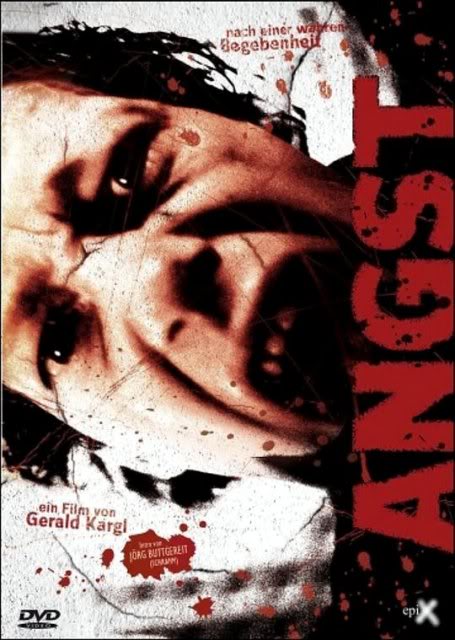
Angst (1983) (1st viewing) d. Kargl, Gerald
Amazingly ambitious cinematography and a mesmerizing central performance from Erwin Leder elevates this low-budget Austrian serial killer flick well beyond its slasher brethren. Preceding John MacNaughton’s Henry: Portrait of a Serial Killer by three years, Kargl’s close-up identification with a recently released from prison psychopath is chilling, especially when the murder scenes do not go as planned. No teleporting masked psychos – here, things get authentically messy, clumsy and terrifying. Difficult to find on VHS or DVD, but relatively accessible via streaming links such as this one: http://stagevu.com/video/vbtyppyhkxvx Highly recommended.

Tuesday, January 12, 2010

Fool's Views - DAYBREAKERS (2009)


What's the good doctor's feelings about the new vampire flick out (the one not for 14-year-old girls)? Let's find out...


Daybreakers (2009) (1st viewing)
d. Sperig, Michael/Sperig, Peter

The boys from Down Under follow up their high-energy, low-budget zombie flick Undead with a vampire epic that starts off with such promising and well-developed mythology that it’s more than a little disappointing when it devolves into “small band of rebels vs. the all-controlling corporate powers” action clichés, complete with predictable last minute double crosses and irksome jump scares (in this case, in the form of annoying vampire bat shrieks). Which is not to say Daybreakers is a bad movie, because it isn’t – filled with capable performances from Ethan Hawke, Sam Neill, Claudia Karvan (the Famke Janssen ringer who appeared in last year’s Long Weekend update) and an especially enthusiastic Willem Dafoe, as well as gorgeously stylized cinematography and production design, there’s a lot to admire from the Sperig Brothers in terms of presentation. But with two variations on all-too-familiar themes under their belts, one hopes that their next venture exhibits more than just inspired repackaging.

Tuesday, January 5, 2010

Dr AC's 2009 Horror Movie Round Up


Howdy troops,

After much deliberation, here's my assessment of the year that was. All of the films listed below were encountered for the first time from January 1 to December 31, 2009 (i.e. no repeat viewings were eligible). To accommodate and acknowledge as many films as possible, I've broken them down into various categories in alphabetical order, with my top pick denoted with an asterisk.

As always, feel free to toss in your two cents worth - we'll make sure you get some change back. Thanks for the past year of rapping and chatting - looking forward to more of the same in 2010!


2009 TOTALS:
140 1st Time Horror Views (out of 289 total)

TOP 20 (or so) 2009 HORROR RELEASES


Antichrist (2009)
Baghead (2008)
Children, The (2008)*
Dead Snow (2009)
Deadgirl (2009)
District ( (2009)
Donkey Punch (2008)
Drag Me to Hell (2009)
Eden Lake (2008)
Grace (2009)
House of the Devil (2009)
I Sell the Dead (2008)
Last House on the Left, The (2009)
My Bloody Valentine 3D (2009)
Paranormal Activity (2009)
Pontypool (2008)
Splinter (2008)
Thirst (2009)
Trick ‘r Treat (2008)
Uninvited, The (2009)
Zombieland (2009)

MIXED BAGS


Book of Blood (2008)
Burrowers, The (2008)
Friday the 13th (2009)
Martyrs (2008)
Midnight Meat Train, The (2008)
Orphan (2009)
Saw VI (2009)
Smash Cut (2008)
Vinyan (2008)
Wizard of Gore, The (2008)
Unborn, The (2009)
Zombie Strippers (2008)


DISAPPOINTMENTS


Carriers (2009)
Collector, The (2009)
Halloween 2 (2009)


TOP HOME VIEWING HORROR DISCOVERIES


Carry On Screaming! (1966)
Creature (1985)
Dark Night of the Scarecrow (1981)
Girly (1970)
Isle, The (2000)
Lost, The (2005
P2 (2007)
Red (2008)
Sadist, The (1963)
Scream Bloody Murder (1973)
Spiral (2007)
TerrorVision (1986)
Timecrimes (2007)*
Stone Tape, The (1972)
Watcher in the Attic, The (1976)
Witchcraft (1964)

PLEASANT SURPRISES (NOT AMAZING, BUT WORTH SEEING)


Cold Prey (2008)
Dance of the Dead (2008)
Flight of the Living Dead (2008)
Les Revenants (2004)
Midnight Movie (2008)
Shredder (2003)


HOME VIEWING DISAPPOINTMENTS


Mirrors (2008)
Prom Night (2008)
Return to Horror High (1987)
Revolt of the Zombies (1936)
Trigger Man (2007)


TOP 13 “WHAT THE ^&@%^@% DID I JUST SEE?” FLICKS


After Last Season (2009)
Bad Biology (2008)
Boarding House (1982)
Fantom Killer (1998)
Island of Death (1975)
Mr. No Legs (1979)
Multiple Maniacs (1970)
Redeemer, The (aka Class Reunion Massacre) (1978)
Sting of Death (1965)
Rock n’ Roll Nightmare (1987)
SS Experiment Camp (1976)
Raw Force (1982)
Wicked, Wicked (1973)
Zaat (1975)


WORST HORROR VIEW OF 2009


Devil Hunter (1980)

Friday, December 4, 2009

Holiday Horrors - BLACK CHRISTMAS (1974)

This month, the good doctor will be celebrating some famous (and infamous) Christmas-themed horror flicks. Some good, some bad, but all guaranteed to put a little more red in your stocking.

We start off with one of the best:


BLACK CHRISTMAS (1974)

Director Bob Clark’s effective (and underrated) holiday thriller pre-dates the slasher film craze and its influence is felt in Halloween, When a Stranger Calls, and countless others.


The simple set-up involves a college sorority house and an (unseen) homicidal killer, heightened by some of the most chilling and unsettling obscene phone calls ever recorded. Utilizing extensive handheld camerawork, this is among the first usage of the “heavy-breathing killer’s point-of-view” shots that would become a staple of the slasher oeuvre.


Red herrings abound and, while a little meandering at times, Roy Moore’s script expends real effort to create distinct characters. These are nicely fleshed out by fine ensemble performances (including Olivia Hussey and Keir Dullea), with Margot Kidder’s foul-mouthed sorority sister and Doug McGrath’s dim deputy taking top honors.


Not as slick or sticky as the genre would become, this suspenseful low-budgeteer still packs a wallop (the sequence where the police are tracing the calls is particularly potent). The murders, while relatively bloodless, are striking and violent, and the final scene is an absolute stunner. The unusual, discordant musical score is by Carl Zittrer.

NOTE: BLACK CHRISTMAS will be screening at midnight at the Portage Theater this Saturday, Dec. 5, as part of Movieside's TERROR IN THE AISLES 3. Don't miss this rare chance to see BC on the big screen!

Tuesday, November 17, 2009

Fool's Views: SUTHERLAND IN THE '70s

Dr. AC takes us back to a time when the clothes were a little looser, the hair a little curlier, the paranoia more rampant... It's time for:

DONALD SUTHERLAND IN THE '70s DOUBLE FEATURE

Don’t Look Now (1973)

Superb direction by Nicolas Roeg and terrific performances help this strange little adaptation of Daphne du Maurier’s story succeed on several levels, deepening with subsequent viewings.


Sutherland and Julie Christie play a married couple reeling from the recent death of their daughter, dramatically played out in the first few minutes. When Sutherland’s work as a restoration expert takes them to Venice to work on a cathedral, they encounter a pair of bizarre middle-aged English sisters, one of whom tells Christie that she has “seen” their daughter. This leads to an unsettling séance where Sutherland is warned to leave Italy, with stranger events unfolding from there.

Roeg keeps his audience off-balance through extensive use of cross-cutting between scenes and flashbacks, and the terrific use of Venice’s blind alleys and waterways only accentuates the disorientation. Not a fast-paced thriller, with a dream-like atmosphere of dread and unpredictability pervading throughout. The “are they really doing it?” sex scene between the leads was trimmed for American distribution, but remains sexy and emotionally visceral. The final scenes will certainly surprise first time viewers; whether they satisfy or not is a matter of taste.


Invasion of the Body Snatchers (1978)


Director Philip Kaufman’s worthy updating of the 1956 sci-fi masterpiece is quirkier and more graphic, with oogey scenes of PG-rated violence and stellar acting all around. This revamped version of Jack Finney’s novel, by W. D. Richter, relocates the setting from that of a small town to that of the equally isolatory existence within a bustling metropolis (San Francisco, in this case), where individuals’ relationships with one another are often so tenuous and surface that we might not initially notice if our neighbors had been “replaced.”


Sutherland stars as a SF health inspector who, along with Brooke Adams, Jeff Goldblum and Veronica Cartwright, begins to suspect that their fellow citizens are being taken over by pod people from space. Kaufman cultivates a marvelous sense of dread and suspense, with numerous striking scenes and elements (the iconic “shriek”, the man/dog combo) – as well as one of the more truly haunting and unsettling endings to be found anywhere. As if to give their stamps of approval, Kevin McCarthy and Don Siegel (star and director of the original film, respectively) appear in memorable cameos.

Wednesday, November 11, 2009

Fool's Views - SPIDER BABY (1968)


Spider Baby or, The Maddest Story Ever Told (1968)
D. - Jack Hill.

Horror fans only familiar with Sid Haig from his recent Rob Zombie flicks or with Lon Chaney, Jr. from his hairy heyday of The Wolf Man should do themselves the favor of experiencing these two genre legends at the beginning and the end of their respective careers.

Writer/director Jack Hill’s fascinating blend of macabre humor and bizarre chills revolves around the Merrye family, stricken with a “progressive age regression” disease that leads to childlike behavior and cannibalism. The three remaining members of the Merrye family, played by Haig, Beverly Washburn and Jill Banner, are cared for by family chauffeur Chaney who is constantly covering up for their less socially acceptable ways. Carol Ohmart (Vincent Price’s wife from House on Haunted Hill) heads up a group of distant relatives seeking the family inheritance unwittingly drawn into the “children’s” games.

Great performances all around combined with Hill’s dementedly dizzy dialogue add up to a delicious combo of shock and satire, with a justly famous dinner table scene providing one of many highlights. Trivia: That’s Chaney himself singing the oogy-boogy title song.

Tuesday, October 27, 2009

FOOL'S VIEWS: Boris Karloff/Val Lewton Triple Feature

From 1942 to 1946, when rust was appearing on the Frankenstein monster’s neck bolts, Dracula was grower longer in the tooth, and swaddled swollen mummies were limping along (both figuratively and literally), a savior appeared on the horror horizon who would provide counterprogramming to the usual parade of fur, fangs and putty. That man was Val Lewton, and his arrival at RKO would herald a new style of horror where less was infinitely more, where shadows grew ripe with menace lurking just beyond the edge of the screen. In 1945, he brought Boris Karloff (who had already been a horror legend for nearly 15 years) aboard for a trio of unforgettable chillers that should be required viewing for any card-carrying horror fan.


Body Snatcher, The (1945)
Arguably Karloff’s finest onscreen performance, this is another great-looking piece of atmospheric horror from producer Lewton. Karloff’s Cabman Gray, oozing ill-intentions and menace while remaining innately likeable, emerges as one of the most intriguing characters in film, regardless of genre. Gray has been employed as a grave robber to provide cadavers for Henry Daniell’s professor to use at his medical institute. When there are too few corpses to satisfy demands, Gray goes about supplying them through “other means.” Philip MacDonald and Lewton (as Carlos Keith) do a terrific job adapting Robert Louis Stevenson’s story (inspired by the real-life exploits of body snatchers Burke and Hare). Robert Wise directs with a sure hand, leaving much of the violence offscreen and allowing our imagination to fill in the ghoulish blanks. The street singer sequence, in particular, is a wonder. Daniell proves a worthy foil to Karloff, and the mounting power struggle between them is electrifying to watch. Bela Lugosi appears in a small role (despite his billing) as Daniell’s servant, and his brief scene with Karloff is startling yet strangely moving. The film marked the final time that the two icons of horror would appear onscreen together.


Isle of the Dead (1945)
It’s Karloff’s show all the way in this odd little Lewton production set in Greece during the 1912 war. Playing the ruthless General Pherides, who respects only the letter of the law, he quarantines a group of civilians on an island when an outbreak of plague strikes. However, as the tiny community dies one by one, he begins to believe an old crone’s accusations—that beautiful young servant woman Ellen Drew is really a “vorvolaka,” a wolf-spirit with vampiric tendencies. The unusually curly-headed Karloff is a wonder to watch as he creates another memorable character, and Katharine Emery’s dying woman terrified of being buried alive leaves a strong impression. However, the love story angle between Drew and American reporter Marc Cramer is devoid of chemistry, further slowing the already lethargic pacing by director Mark Robson (who would fare much better the following year with Bedlam.) Still, the quality Lewton production values are in place, with a chilling sequence in the island crypt that will cause nightmares for many.


Bedlam (1946)
This third collaboration of Karloff and Lewton is not a straightforward horror tale, yet contains some chilling moments nonetheless. Karloff is absolutely captivating as Master Sims, the sadistic yet utterly charming chief warden of St. Mary’s of Bethlehem, known as Bedlam. When flinty heroine Nell Bowen (Anna Lee) interferes with Sims’ plans to ingratiate himself to Lord Mortimer (a delightful performance by Billy House), he has her incarcerated as a madwoman under his charge. Within this realm, where Sims has reigned unchallenged for years, their battle of wills escalates as the sharp-witted and steel-spined Nell forms alliances with her fellow lunatics, some of whom are not as they seem. While Karloff is ostensibly the villain of the piece, his presence is so magnetic and fascinating the audience may find it difficult to root for his downfall. Lewton (under pseudonym Carlos Keith) is responsible for the suspenseful and witty screenplay, which contains numerous nightmarish images, including an inmate suffocating from being dipped in gold paint (a precursor to James Bond’s Goldfinger) and a ghoulish “trial” of Sims by his tormented patients. Director Mark Robson, who served as editor and/or writer on numerous earlier Lewton productions, skillfully evokes a shadowy atmosphere of gloom. This marked the final Lewton/RKO teaming, concluding a remarkable string of high quality/low-budget fright flicks.

Thursday, July 30, 2009

FOOL'S VIEWS: Lovin' that Lovecraft

Dr. AC spends a little time with HPL, or at least the screen adaptations of several of his stories from a variety of different quarters. Stuart Gordon's Re-Animator (1985) and From Beyond (1986) are probably common knowledge to most card-carrying genre fans, so we'll skip past those for a triple feature of lesser-known fare:

Curse of the Crimson Altar (aka The Crimson Cult) (1968)


One of Boris Karloff’s final films, this is a (very) loose adaptation of one of Lovecraft’s lesser tales, “The Dreams in the Witch House.” Mark Eden stars as an antique dealer who ventures to the rustic town of Greymarsh in search of his disappeared brother, encountering cool and charming Christopher Lee as his host, as well as a green body-painted Barbara Steele within his nightmares. As a learned expert in witchcraft, Karloff lends admirable support alongside Michael Gough as a mumbling servant, but the muddled plot (something about a witch’s descendant who has formed a new cult, which also requires new blood sacrifices) and bungled climax leave much to be desired. Exec-produced by Tony Tenser.

Dagon (2001)


Re-Animator director Stuart Gordon takes on Lovecraft again with mixed results. Based on "The Shadow over Innsmouth," two couples are shipwrecked off the coast of Spain, and discover the locals are amphibian mutants with a dark secret. Though imaginatively directed with loads of dark and stormy atmosphere, the biggest problem lies in lead actor Ezra Godden’s performance, who plays his character as an annoying nerd never fully invested in the increasingly bizarre situation at hand. While the rest of the cast (which includes stunning beauties Raquel Merono and Macarena Gomez) plays it straight, Godden’s frantic joking approach (presumedly at the behest of Gordon) robs the movie of any real suspense or fear. Thankfully, veteran Spanish actor Francisco Rabal grounds his scenes with the necessary gravitas to carry the film to its final act, where everyone stops messing around and the movie takes off. There is a shocking torture sequence that will please any gore hound (though one could argue its gratuitous nature), and the frenzied special-effects climax pays off surprisingly well. If only it wasn’t such a slog getting there, though Gomez’s frequent topless appearances make the trip easier going.
Haunted Palace, The (1963)

Solid diversion from producer/director Roger Corman and star Vincent Price in the midst of their AIPoe glory. Despite being renamed with an Edgar Allan Poe poem title, the plot is actually derived from Lovecraft’s novella, “The Case of Charles Dexter Ward,” with the end results certainly satisfying enough to keep grumbling over false advertising to a minimum. Charles Beaumont’s script describes a warlock (Price) who possesses a descendant to wreak revenge against the townspeople who burned him at the stake. Debra Paget is lovely in support as Price’s spouse, confused by her husband’s violent personality shifts, and Lon Chaney, Jr. (deep in the bottle at this point) acquits himself ably as the warlock’s ancient servant.

Tuesday, July 21, 2009

FOOL'S VIEWS: Jack Ketchum Triple Feature

It appears that for author Jack Ketchum, there are few things scarier in this world than bored, disenfranchised youths from small town America. Based on these three extremely effective, low-budget screen adaptations of his novels, a good case could be made for that viewpoint:


Girl Next Door, The (2007) (1st viewing)
Inspired by the real-life 1965 slaying of Indiana teenager Sylvia Likens, dour suburban divorcee Blanche Baker gains popularity with the neighborhood adolescents by handing out beers and letting them watch TV all day long. But the hijinks take a significantly darker turn when she offers up her 14-year-old adopted niece (Blythe Auffarth) to the youths as a plaything for every imaginable abuse. Peeking beneath the 1950’s seemingly placid exterior of Ozzie and Harriet normalcy, director Gregory Wilson and screenwriters Daniel Farrands and Philip Nutman tackle the unenviable task of creating a film with torture-porn tendencies while refusing to turn it into just another exploitation programmer. The result is an uneasy mix of moralizing and terrorizing, akin to a TV movie with intense subject matter and implied violence, where it is the viewer’s own moral compass providing the chills as opposed to a director’s vision. More disappointing is the choice to eliminate the internal conflict felt by our lead character David, played Daniel Manche – rather than being equally fascinated and horrified by the events in the basement next door (as he is in the novel), David merely struggles with the impotence and insecurity of youth. This approach works, but there is certainly more ore to be mined in the former, and it seems like a missed opportunity to address the very core of the horror genre and its fans. Even so, it is a worthy effort and the extraordinary performances by Baker (who played Molly Ringwald’s sister in 1984’s Sixteen Candles!) and Auffarth carry the day.


Lost, The (2005) (1st viewing)
Written/directed by Chris Sivertson, The Lost opens with an onscreen invocation that conjures a dark fairy tale, “Once upon a time, a boy named Ray Pye put crushed beer cans in his boots to make himself taller.” As Pye, Marc Senter leads an extraordinary cast of fresh faces and well-schooled veterans, fully inhabiting his loathsome, murderous character with a combination of electrifying instability and cloaked insecurity. The two-hour running time, born of Sivertson’s desire to preserve Ketchum’s subplots, might test the patience of some, but the gamble pays off big-time when the explosive, bloody climax inevitably arrives – In terms of emotional involvement, the viewer actually has something to lose.


Red (2008) (1st viewing)
A similar ethic accompanies Red, which follows the escalating levels of violence following the senseless thrill-killing of an older man’s faithful canine companion. Brian Cox anchors the picture with an unmannered portrait of a man looking for justice in a corrupt world, where money and power breed contempt for one’s fellow man. Well acted by a capable ensemble, Red succeeds mightily as a dramatic showcase boasting solid performances (though it could have lost its too-pat ending and been a better film for it).